Father forgets
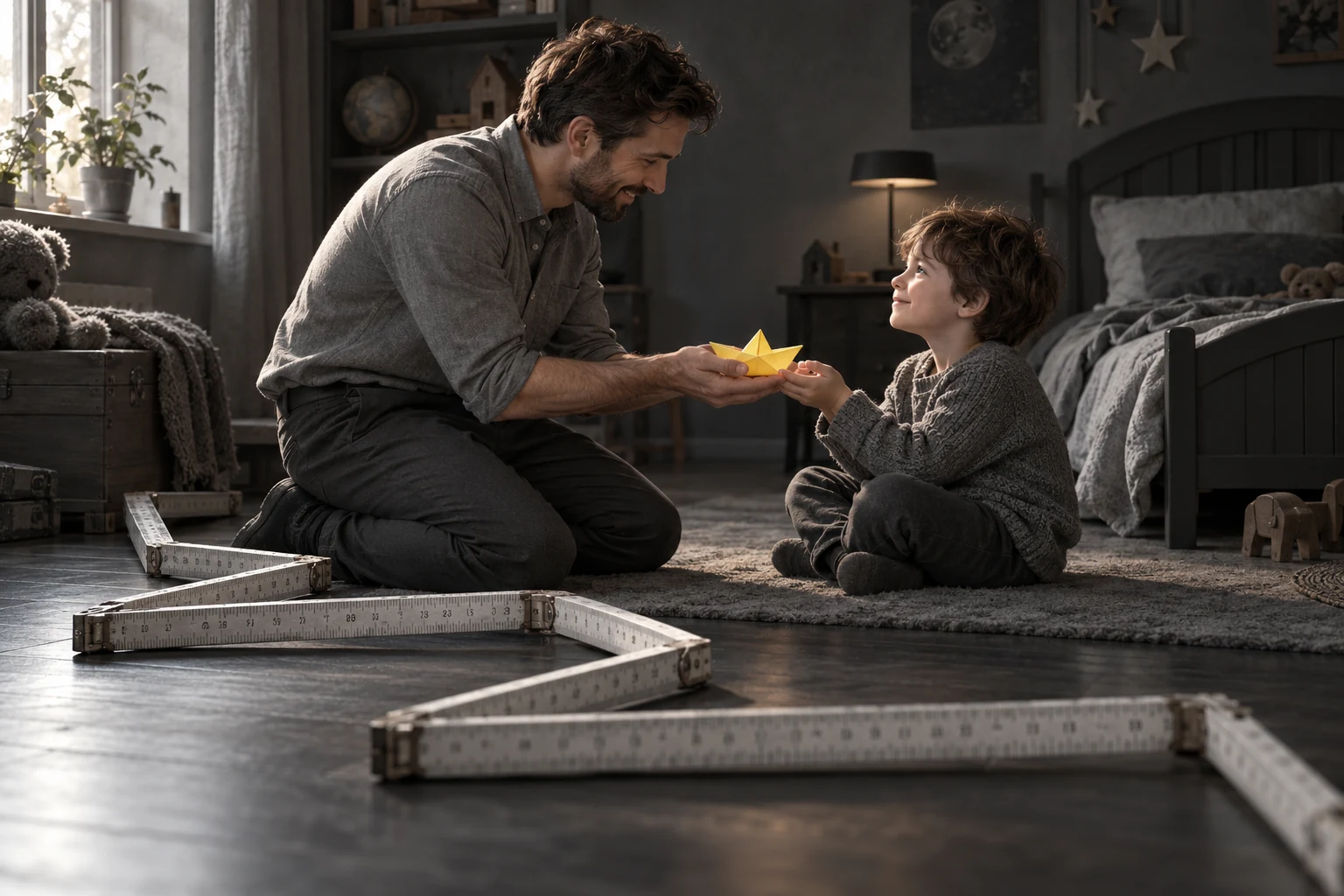
Parents are often tempted to reproach their children. You probably expect me to tell you not to. No. I will only say: “Before reproaching them, read one of the classics of American journalism, ‘Father Forgets’ by W. Livingston Larned.”
Listen, son: I am saying this while you sleep, one little hand tucked under your cheek, your blond curls clinging to your damp forehead. I have crept into your room. Only a few minutes ago I was sitting in the study, reading my newspaper, when a feeling of guilt suddenly came over me. Full of remorse, I came to your bedside.
This is what I was thinking, son. I have been unkind to you. I scolded you while you dressed for school, just because you only gave your face a quick wipe with the towel. I scolded you for not polishing your shoes. I shouted angrily because you had left some things on the floor.
At breakfast I found more things to scold you for. You spilled this and that, ate greedily without chewing properly and put your elbows on the table. You spread too much butter on your bread. As you went out to play and I left to catch the train, you turned, waved and called: “Goodbye, Dad!” I frowned and replied: “Why are you slouching!”
In the afternoon it all started again. Coming along the road, I saw you kneeling on the ground playing marbles. You had torn your socks. I shamed you in front of your friends by marching you home ahead of me. I told you socks cost money and that if you had to buy them yourself, you would be more careful. Imagine, son, a father saying such a thing!
Do you remember coming shyly into the study later, while I was reading, with a hurt look in your eyes? I looked at you over my newspaper, annoyed at being interrupted, and you stopped in the doorway. “What do you want?” I asked sourly.
You said nothing, but ran across the room, put your arms around my neck and kissed me. Your little arms held me with the love God had kindled in your heart, which even my neglect could not put out. Then you ran upstairs.
Son, a little later the newspaper slipped from my hands and a terrible, paralysing fear came over me. What has habit done to me? The habit of finding fault and reproaching you: that was my reward to you for being a child. It is not that I do not love you; I simply expect too much. I measure you by the yardstick of my own years.
Your character holds so much goodness, insight and devotion. Your little heart is as generous and pure as the dawn over the mountains. That was why you came back spontaneously to kiss me goodnight. Everything else lost its meaning for me tonight, son. I came to your bed in the darkness and knelt here in shame!
It is a poor compensation. I know you would not understand these things if I told you while you were awake. But tomorrow I will be a real father! We will be friends; I will hurt when you hurt and laugh when you laugh. I will bite my tongue when impatient words press forward. I will repeat to myself like a ritual: “He is only a child, a little child!”
I am afraid I had been thinking of you as a grown man. But looking at you now, son, curled up in your little bed, I see how very small you still are. Only yesterday your mother carried you in her arms and you rested your head on her shoulder. I asked too much of you, far too much.
Instead of judging people, let us try to understand them. Let us try to imagine why they act as they do. That is much more useful and interesting than criticism. It also gives rise to sympathy, tolerance and kindness. “To know all is to forgive all.”
Dale Carnegie, “How to Win Friends and Influence People”
Kibea Publishing, 1996
English version translated for EMOLLIENT from the archived Bulgarian text
Illustration
Image created for EMOLLIENT
You don’t have to pay any attention to this field
But if you have something to add — this is the place
Comments